You have a meeting on the calendar with a business owner who wants to hear about ICHRA, and three days to put something in front of them that doesn’t look like it took twenty minutes. Building a real branded page takes a web developer most agents don’t have, and the free tools produce a static file that looks exactly like the last five decks the owner has already seen this quarter. Ambrose’s demo-forge spoke builds a branded, live, schema-tagged demo site from a single request, one seat comes with the Tech Savvy membership, and the section below shows you the manual version first so you know exactly what it’s replacing.
Key takeaways
- An Applicable Large Employer's ICHRA offer is affordable for 2027 if the employee's leftover cost for the cheapest Silver plan stays at or below 10.22% of household income, per IRS Rev. Proc. 2026-26 — up from 9.96% for 2026.
- More than 500,000 people were covered by an ICHRA as of January 31, 2026, and more than 20,000 U.S. businesses now offer one, up 53% year over year, per the HRA Council's 2026 report.
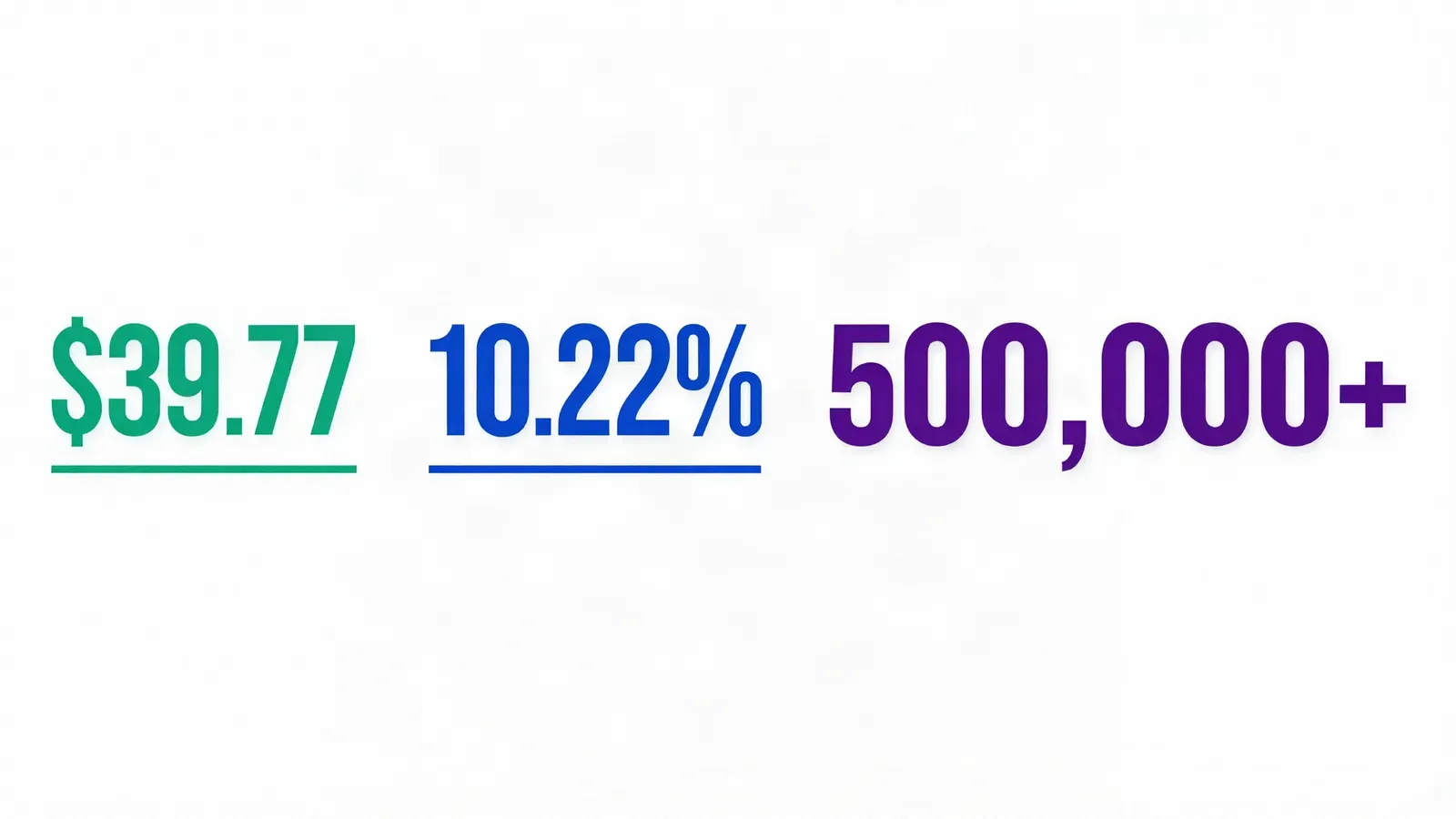
- A DIY website builder runs about $39.77 a month on Wix's Business plan; the bigger cost is the hours it takes an agent to build and maintain the page instead of selling.
- The full manual method, structure, numbers, and tools, is below and works with zero software beyond what you already have.
- Ambrose's demo-forge spoke — a Free-tier, live spoke with three tools:
demo_build_site,demo_generate_schema, anddemo_publish— builds and deploys the same kind of page to the agency's own demo subdomain, with structured markup included.
Written for the agent building the deck, not a benefits consultant
Tech Savvy Insurance is a training and software community, not an insurance company, insurance agency, or law firm, and nothing here is insurance, legal, tax, or compliance advice. The ICHRA rules, IRS figures, and HRA Council data below are cited to their primary sources so you can verify them yourself before you put them in front of an employer.
The meeting you got and the deck you don’t have
Here’s how it usually goes. A referral partner, a CPA, a chamber contact, sends you to a business owner who just got a group renewal that jumped 19% and wants to hear about “that HRA thing.” You have the meeting. It goes well. The owner asks you to send something over that they can share with their office manager and their spouse before deciding. You open a blank document and realize you have nothing built for this specific employer: their group size, their current premium, what an ICHRA allowance would look like against it, and what their employees would actually experience shopping the individual market instead.
What you send instead is one of three things, and none of them helps you. A generic ICHRA overview PDF that could go to any employer in the country and reads that way. A slide deck exported from PowerPoint with your logo on the title slide and stock photography on every other one. Or nothing, because building something better felt like a two-day project you didn’t have time for, so you promised to “follow up with more detail” and never quite did.
Meanwhile the employer is also getting a call from their existing group broker, who has a renewal proposal ready by end of week because that’s a template they run every year. ICHRA is the newer, less familiar option. If the material behind it looks improvised, the safer, more familiar choice wins by default, whether or not it’s the better one for that employer’s budget.
Why a generic deck loses the room
It loses because ICHRA is still the option the employer has to be sold on understanding, not just buying. A renewal proposal for the existing group plan requires no education: same plan, new number, sign here. An ICHRA proposal is asking the employer to change the entire model, from “we pick one plan for everyone” to “we give each employee a defined allowance and they shop for themselves.” That’s a bigger ask, and a bigger ask needs material built around their actual numbers, not a template with their logo dropped in.
It’s also a newer conversation than most agents’ sales material is built for. The HRA Council, an industry association of ICHRA administrators, technology vendors, and brokers, reported that ICHRA adoption among Applicable Large Employers — companies with 50 or more full-time-equivalent employees — roughly doubled year over year in 2026, and that overall, more than 20,000 U.S. businesses now offer an ICHRA or QSEHRA as their primary health benefit, up 53% from 2025 (HRA Council, 2026 report). More employers are asking about this than were asking two years ago, which means more agents are walking into this exact meeting without material built for it, because they didn’t need it before.
There’s a second reason a generic deck loses, and it’s one most agents never think about: the page you leave behind doesn’t exist anywhere the employer, or their spouse, or their office manager can find it again on their own later. A PDF gets buried in a downloads folder. A real page, with your name and the employer’s numbers on it, can be reopened, forwarded, and if it’s built with proper structured data behind it, found again by search. That’s not a nice-to-have. It’s the difference between “let me pull that back up” and “can you resend that thing.”
What building it yourself actually costs
Start with the tool cost, because it’s the easy number. If you build the page on a website builder instead of a slide deck, Wix’s Business plan runs $39.77 a month as of this writing, and that’s before you add a custom domain or any paid apps for forms and tracking (Wix, website plan pricing). That’s a real monthly line item for something you might use for one employer meeting and then let sit, unless you’re doing this often enough to justify keeping the subscription active.
The bigger cost isn’t the subscription. It’s the hours. Laying out a page, writing the copy, building a cost comparison that’s actually correct, and getting the branding to look like it wasn’t rushed is realistically a half-day to a full day of work for someone who isn’t a designer, and that’s a half-day or a full day not spent prospecting or servicing your existing book. There’s no published industry figure for how many hours a solo agent spends on this kind of one-off material, and we’re not going to invent one. What you can do is time yourself the next time you build one from scratch and use your own number going forward — that’s more accurate for your business than any industry average would be anyway.
There’s a slower cost too, one that shows up over months instead of on an invoice: every employer meeting where you show up with less than the group broker on the other side of the decision is a meeting where ICHRA starts from behind on credibility, regardless of whether it’s the stronger financial option. You can win the numbers and still lose the room if the material looks like an afterthought.
The manual method: build a real ICHRA presentation with free tools
None of what follows requires anything beyond Google Slides or Canva, a spreadsheet, and the willingness to plug in this specific employer’s numbers instead of generic placeholders. This is the actual structure, and it’s the same one worth using whether you build it by hand or hand it to Ambrose to build for you.
1. The current-cost baseline. One slide, one number: what this employer pays today per employee per month for group coverage, and the renewal increase they just received if you have it. Don’t editorialize yet. Just anchor the conversation in their real number, not an industry average.
2. What an ICHRA allowance would look like against that baseline. Show two or three allowance scenarios — conservative, matching current spend, and a modest increase — and what each would mean as a monthly per-employee reimbursement. The HRA Council’s 2026 data gives you a real-world benchmark to show alongside your scenarios: nationally, the median employer allowance per covered life was $459 against a median premium of $567, meaning employer allowances covered roughly 81% of the premium for employees’ preferred plans on average (HRA Council, 2026 report). That’s a useful sanity check for the employer: “here’s what a similar allowance covers nationally” next to “here’s what yours would cover for your team.”
3. The affordability math, shown, not asserted. If this employer has 50 or more full-time-equivalent employees, they’re an Applicable Large Employer under the ACA, and an inadequate ICHRA allowance can trigger the employer shared responsibility payment under Section 4980H(b) for any employee who ends up with subsidized Marketplace coverage instead. For plan years beginning in calendar year 2027, an offer is affordable if the employee’s remaining cost for the lowest-cost Silver plan available to them doesn’t exceed 10.22% of household income — the Required Contribution Percentage set in IRS Rev. Proc. 2026-26, up from 9.96% for plan years beginning in 2026 (IRS, Rev. Proc. 2026-26). Put the actual math on the slide with a real example employee’s estimated income, not just the percentage. Employers trust a number they can see calculated more than a rule they’re told to take on faith.
4. What the employee experience actually looks like. This is where a lot of decks go generic (“employees choose their own plan!”) instead of concrete. Walk through what an employee at this specific company would see: they’d shop Marketplace or off-exchange individual plans, use their allowance as a fixed reimbursement, and keep the difference or pay the difference depending on what they pick. The HRA Council’s data shows this isn’t a hypothetical risk for employees: 81% of ICHRA-covered employees nationally elected to spend more than their allowance for better coverage, and Gold and Silver plans, not Bronze, were the most common selections, at roughly 34% and 32% of enrollment respectively against about 29% for Bronze (HRA Council, 2026 report). That tells the employer something specific: employees aren’t defaulting to the cheapest plan out of confusion. They’re actively choosing coverage that fits them, which is the argument for ICHRA in the first place.
5. The objection slide, answered before it’s asked. Reporting on ICHRA broker experience identifies three objections that come up most: individual-market plan quality concerns, employee perception that a switch “feels like a benefits cut,” and a paternalistic worry that employees “can’t handle” shopping for their own plan. Give each one its own slide and answer it with data instead of reassurance, because an employer who sees the objection named and answered trusts the material more than one who has to raise it themselves and watch you improvise a response.
For the “feels like a benefits cut” objection, the HRA Council’s 2026 data cuts the other way for a meaningful share of small businesses: more than 67% of small businesses offering an ICHRA had previously offered no group health coverage at all, and 93% of businesses newly offering a QSEHRA in 2026 had no prior coverage program (HRA Council, 2026 report). For an employer in that position, ICHRA isn’t replacing a richer plan — it’s the first health benefit they’ve ever offered, which is a materially easier sell than “we’re taking something away.”
For “can’t handle shopping for their own plan,” point back to the plan-tier data from step 4: employees overwhelmingly choose Gold and Silver, not Bronze, and the majority spend above their allowance rather than taking the cheapest option available. That’s a workforce making informed tradeoffs, not one defaulting to confusion.
For individual-market plan quality, that’s a fair question to research locally rather than answer with a national statistic — pull the actual Marketplace plans available in the employer’s county and show the provider networks and metal-tier benefits side by side with what the group plan currently offers. A generic reassurance here reads as exactly that: generic.
| Section | What to show | Source for the number |
|---|---|---|
| Current-cost baseline | This employer's actual per-employee premium and renewal increase | Their own renewal notice |
| Allowance scenarios | 2-3 allowance levels, plus the national median ($459 allowance / $567 premium) | HRA Council, 2026 report |
| Affordability math | The 10.22% Required Contribution Percentage calculated against a real employee's estimated income | IRS Rev. Proc. 2026-26 |
| Employee experience | Plan tier mix (Gold ~34%, Silver ~32%, Bronze ~29%) and the 81% who spend above their allowance | HRA Council, 2026 report |
| Objections | The three most common broker-reported objections, answered with the data above | Public broker commentary; answer with your own sourced data |
Allowance vs. premium: the national ICHRA median
What the typical employer allowance covers against the typical premium an employee selects.
Source: HRA Council, Growth Trends for ICHRA & QSEHRA, 2026 report, data as of January 31, 2026.
6. Build it somewhere the employer can reopen it. A Google Slides deck exported to PDF is fine for the meeting itself, but if you want the material to survive being forwarded to a spouse or a business partner, a simple hosted page (Google Sites, Carrd, or the Wix route above) beats a PDF attachment that gets buried. Put your name, the employer’s name, and a clear next step at the bottom.
Use this employer's numbers, not a template's
The single biggest tell that a proposal was rushed is generic numbers. Every figure above that says "this employer's" instead of "the average employer's" is the difference between material that reads as custom work and material that reads as a template with a new logo.
QSEHRA vs. ICHRA: put the right one on the page
Some of the employers you’re meeting with don’t need ICHRA at all. If the business has fewer than 50 full-time-equivalent employees and offers no other group health plan, a Qualified Small Employer HRA is usually the simpler pitch: it caps the reimbursement instead of leaving it employer-defined, but it comes with a narrower set of rules to explain. For 2026, the maximum QSEHRA reimbursement is $6,450 for self-only coverage and $13,100 for family coverage, per IRS Rev. Proc. 2025-32 (IRS, Rev. Proc. 2025-32, Section 4.63). Put that cap on the page next to the employer’s current per-employee cost. If their current spend already exceeds the QSEHRA cap, that’s your answer before the meeting even starts: they need ICHRA, which has no such ceiling, not QSEHRA.
| Question | QSEHRA | ICHRA |
|---|---|---|
| Employer size | Fewer than 50 full-time-equivalent employees | Any size, including Applicable Large Employers |
| Can offer a group plan too? | No — QSEHRA requires no other group health plan | Can be offered to one class of employees while a group plan covers another |
| 2026 reimbursement cap | $6,450 self-only / $13,100 family (IRS Rev. Proc. 2025-32) | No statutory dollar cap |
| Best fit | Small employer offering a health benefit for the first time | Employer whose current per-employee cost already exceeds the QSEHRA cap, or an ALE managing the 2027 affordability requirement |
Where the manual method breaks down
It breaks down on repetition. The method above works well for one employer. Do it eight times in a busy quarter and you’re rebuilding the same structure by hand every time, re-typing the IRS percentage, re-pasting the HRA Council numbers, and re-formatting a deck that looked fine the first three times and rushed by the sixth.
It also breaks down on the part most agents skip entirely: making the page findable again later. A Google Slides link or a PDF has no structured data behind it, so if the employer’s office manager searches for “ICHRA [your agency name] proposal” three weeks later because they lost the email, there’s nothing for a search engine, or an AI answer engine, to surface. A real page with schema markup behind it can be found again the way a forgotten link can’t.
And it breaks down on speed when the meeting request comes in tomorrow instead of next week. The manual method above is genuinely doable in half a day. It’s not doable in the twenty minutes you have between two other appointments.
How Ambrose builds it: the demo-forge spoke
This is the part Ambrose actually automates, and it’s documented specifically enough to describe exactly what it does rather than gesture at “AI helps with this.”
Ambrose’s spoke catalog lists demo-forge as a Free-tier spoke, meaning it works from public data only and never touches client PHI — the same trust tier as lead-hunter, marketplace-finder, and the watchdog spokes (Ambrose docs, Spokes). That tier fit isn’t an accident: a prospect-facing employer presentation shouldn’t involve protected health information in the first place, and the spoke’s classification reflects exactly that.
The spoke carries three documented tools (Ambrose docs, spoke-demo-forge):
demo_build_site— builds a branded demonstration website from the request, the equivalent of the layout-and-copy work in steps 1 through 6 above.demo_generate_schema— produces JSON-LD structured markup for the page, the exact piece the manual method has no easy way to add, which is what makes the page findable again by search and AI answer engines instead of disappearing into a downloads folder.demo_publish— deploys the finished page to the agency’s own demo subdomain, so what you hand the employer is a live URL, not an attachment.
It’s documented as live, not a beta feature, and it’s positioned to pair with the search-audit spoke — the one that runs AEO and SEO visibility audits — for a combined deliverable: an audit of where the employer’s own site or the agent’s own presence is weak, plus a mockup built to address it (Ambrose docs, Spokes).
| Part of the job | By hand | What Ambrose does |
|---|---|---|
| Lay out and write the page | Half a day to a full day in Slides, Canva, or a website builder | demo_build_site generates the branded site from the request |
| Make it findable later | No structured data on a slide deck or PDF export | demo_generate_schema adds JSON-LD markup to the page |
| Get it live for the employer | A hosted builder subscription, a domain, and your own publish step | demo_publish deploys to the agency's own demo subdomain |
| Keep client data out of it | Discipline: don't paste anything client-specific into a builder | demo-forge is a Free-tier spoke by design — public data only |
| Repeat it for the next employer | Rebuild most of it from scratch | Same tools, new request, minutes instead of hours |
One honest boundary: the numbers that make the presentation credible — the 10.22% affordability threshold, this employer’s actual renewal cost, the HRA Council benchmarks — still have to come from you or be checked by you before the page goes out. Ambrose builds the site and the markup; it doesn’t independently verify that the IRS percentage you gave it is current, or that you’ve read the employer’s renewal notice correctly. Read every generated page before you send it, the same way you’d read a note before you rely on it. AI outputs may contain errors, and this is exactly the kind of client-facing material where that matters.
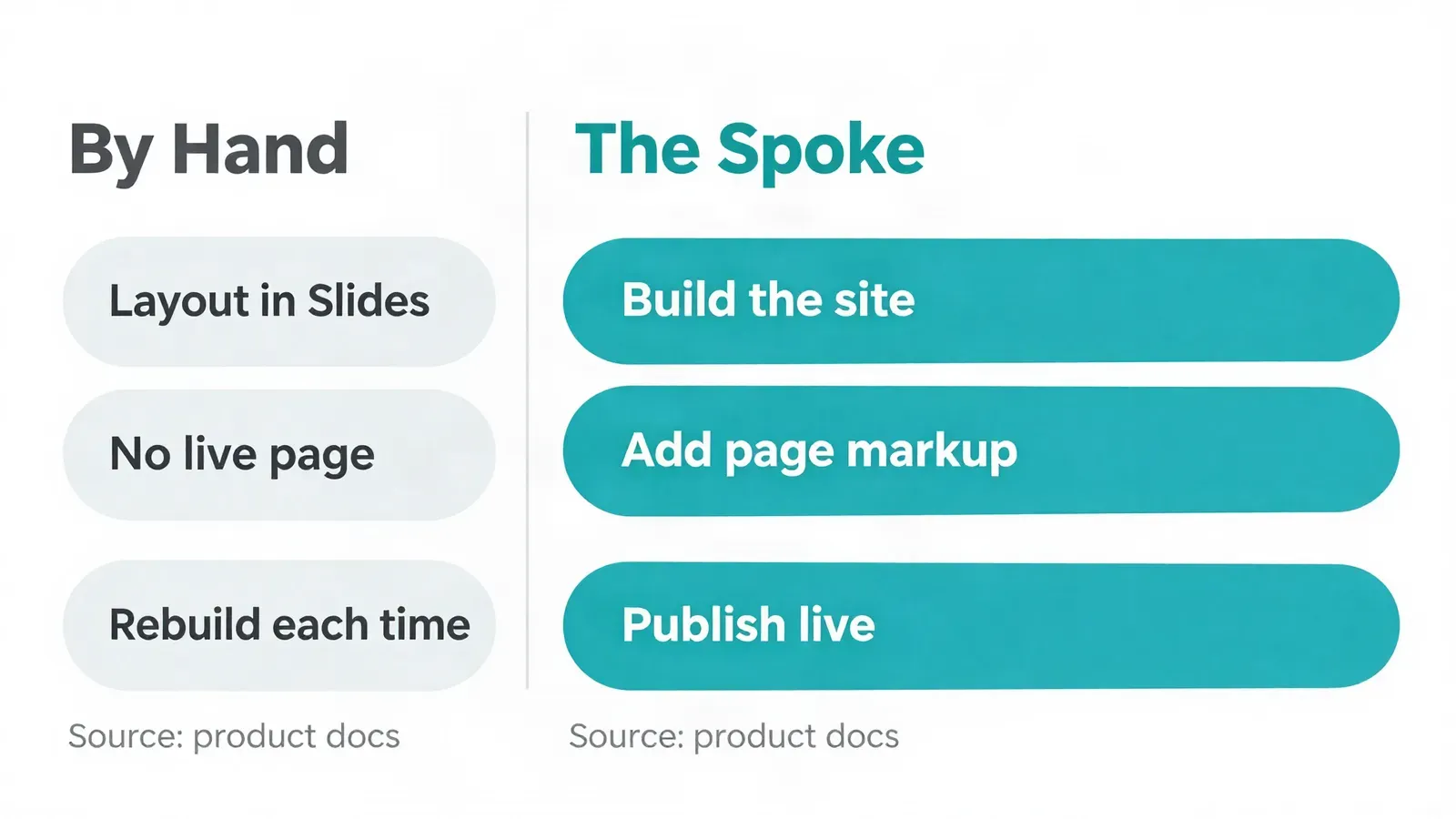
demo_build_site, demo_generate_schema, and demo_publish — mapped to the same three jobs. Source: Ambrose docs, Spokes catalog and spoke-demo-forge, 2026.Compliance: what this touches
The NAIC’s Model Bulletin on the Use of Artificial Intelligence Systems by Insurers has been adopted in 25 states and the District of Columbia, with four more states — California, Colorado, New York, and Texas — operating their own insurance-specific AI regulation or guidance instead, as of April 1, 2026 (NAIC, Implementation of NAIC Model Bulletin map). The expectation that carries down to agency-level AI use is consistent across those frameworks: a written understanding of how AI tools get used, human review of what they produce before a client or prospect sees it, and documentation you could show a regulator if asked.
An AI-generated employer presentation is squarely inside that expectation. Before you send a page Ambrose or any other tool built, check the numbers against their sources yourself, note the date you built it and against which data, and don’t let a generated page go out with a stale affordability percentage or a made-up allowance figure. “Results may vary” applies here too: the allowance scenarios and cost comparisons in any presentation are illustrations, not a guarantee of what a given employer’s actual claims experience or plan selection will produce.
What you get by joining
One Ambrose seat, including the demo-forge spoke and its pairing with search-audit, comes with a Tech Savvy Insurance membership: $97 a month, billed monthly, cancel anytime, founding rate locked in while the membership stays continuously active. Ambrose usage runs on its own credit ledger with spend caps, separate from the $97, so the cost of building these pages stays visible instead of showing up as a surprise (Ambrose docs, What is Ambrose).
Alongside the seat: weekly Zoom calls with open Q&A and build-with-you sessions, where building out a real employer presentation with Ambrose open on the screen is exactly the kind of thing that gets worked through live; 30+ hours of recorded training; Meta Ads, AI, and marketing training aimed at health and life agents; pre-built AI templates and bot deployments; and a free annual in-person member workshop. It’s an explicit no-recruiting zone, so you can ask “how do I build a proposal site for a 40-person employer” without ending up on someone’s downline pitch.
If you'd rather have it built than build it
Everything in the manual method above works whether you join anything or not. If you'd rather have Ambrose put the page together, with people watching your screen while you set it up, that's what the membership is for. $97 a month, cancel anytime, and nobody will pitch you a downline.
The close
You have everything above to build the next ICHRA presentation by hand: the structure, the current affordability math, and real national benchmarks to sanity-check your numbers against. Go build it for the meeting you already have on the calendar. When you’d rather point a spoke at the request and get a branded, schema-tagged, live page back in minutes instead of a half-day, one Ambrose seat comes with the membership.
Frequently asked questions
Sources
- IRS: Rev. Proc. 2026-26 (Required Contribution Percentage for plan years beginning 2027, Section 3.02) — irs.gov
- IRS: Rev. Proc. 2025-32 (QSEHRA maximum reimbursement for 2026, Section 4.63) — irs.gov
- HRA Council: Strong ICHRA Growth Among Large Employers Strengthens ACA Marketplace and Risk Pool (2026 report, via PR Newswire) — prnewswire.com
- Wix: website plan pricing — wix.com
- NAIC: Implementation of NAIC Model Bulletin, Use of Artificial Intelligence Systems by Insurers (state adoption map, status as of April 1, 2026) — content.naic.org
- Ambrose docs: spoke-demo-forge — app.hiambrose.com
- Ambrose docs: Spokes catalog — app.hiambrose.com
- Ambrose docs: What is Ambrose — app.hiambrose.com
Ready to put this into practice?
Join a private community of Health & Life insurance professionals using AI, Meta Ads, and automation to grow — without draining their bank account.
Join Tech Savvy — $97/month